S8E1804 March 2024

S8E180: The Importance of Modularity, Scalability and Interoperability with Mike Paul

S8E180

S8E180: The Importance of Modularity, Scalability and Interoperability with Mike Paul

0:000:00
100%

In this episode of the Project Chatter podcast, Val and Dale interview Mike Paul, the Managing Director for InEight for Europe, Africa, and the Middle East. They discuss the concepts of modularity, scalability, and interoperability in project management. Mike emphasises the importance of considering people and processes alongside technology in project implementation. They also explore the challenges of data ownership and integration in the project supply chain. The conversation highlights the need for transparency and collaboration among stakeholders to achieve successful project outcomes. In this conversation, Mike Paul discusses various topics related to data ownership, scalability, the future of construction, sustainability, the need for an ideas factory, the value of marginal gains, and the nature of leadership.

Guest

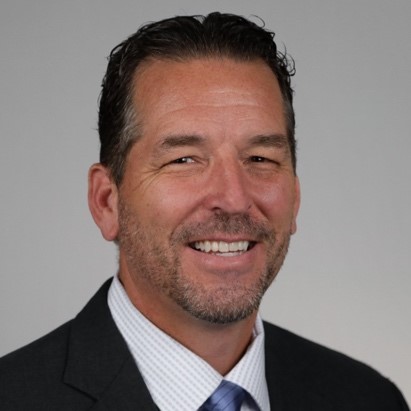
Mike Paul

Mike Paul

Managing Director EMEA at InEight

Mike Paul, Managing Director EMEA, InEight As Managing Director of the Europe, Middle East and Africa (EMEA) business operations at InEight, Mike Paul leads marketing and sales efforts while defining and driving the growth of digital solutions that fuel customer success. Directly preceding his current role, Mike was Vice President of Industry Solutions, acting as the liaison between clients in the industry and InEight’s sales and development team in over 20 countries on five continents. Mike has also served as Vice President of Solution Engineering, Director of Industry Solutions, Director of Global Channel, Sales Engineer and Sales Executive, all at InEight. Previous to his time at InEight, Mike held multiple leadership positions throughout the construction industry. These include managing all the infrastructure work on one of the nation’s first BRAC development projects at Fort Carson Army Base, negotiating large low-income housing projects in Africa, developing global supply chains for U.S. government contract needs and running his own construction company. Mike holds a bachelor’s degree in civil engineering from the University of Arizona, and an MBA from Averett University in Virginia.

Connect

Related Episodes

More conversations on similar topics

S6E150

S6E150: Project Controls in Design & Engineering stages with Paul Waskett

In this week’s pod, we were joined by Paul Waskett to discuss Project Controls in design and engineering stages. Paul is a Director of Adept Management where he takes responsibility for the development of their Project Controls tools and services, as well as supporting clients and projects across the construction industry. Since 2014, Paul has been supporting two major rail projects. He is a Mechanical Engineer by background and has over 20 years’ experience in Design Management and Project Controls. In addition, Paul has spent time working in central government, where he managed a construction innovation budget, and as a researcher where he developed some of Adept Management's innovative approaches to design planning and management.  The main topics we discussed on the podcast were as follows: There is generally more scrutiny on the construction part of a design and build contract however both need equal attention in order to manage projects effectively Design planning is not as linear as other types of programmes. There are generally more interdependencies and iterations of designs Build a WBS and identify relevant activities and inputs before starting the planning process As the project is delivered, the Last Planner System can be used to monitor progress Using % complete to measure design progress can be difficult to implement consistently Working from home has made it more difficult to promote communication and problem solving in major projects as the relevant stakeholders are not collaborating as often as they would in an office based environment Earned Value Management only works when rules of credit are in place and all stakeholders are aware of the limitations of it being the sole measure of progress Digital twin can help engineers to assess the effect of what may seem like a small scale change on a design It is prudent to have a sole interface between engineering and project management in order to deliver a consistent message One of the key challenges for Engineering Managers is to get the “commitment” from the engineering team(s) to deliver to a specified date or budget Here are links to some of the topics we discussed: The Latham Report – Constructing The Team: https://constructingexcellence.org.uk/wp-content/uploads/2014/10/Constructing-the-team-The-Latham-Report.pdf Adept Management: https://www.adeptmanagement.com/ Last Planner System: https://leanconstructionblog.com/What-is-the-Last-Planner-System.html Join us next week when we speak to Tony Welch to discuss five levers for change. For more information, blogs or to support our charities visit www.projectchatterpodcast.com If you'd like to sponsor the podcast get in touch via our website.You can also leave us a voice message via our anchor page and let us know if there's something or someone specific that you would like on the podcast. Proudly sponsored by: https://www.justdo.com/ https://ineight.com/ Stay safe, be disruptive and have fun doing it! #ProjectManagement #Engineering #PMO #ProjectControls #Leadership #Culture

Listen Now
S10E222

S10E222: Why Great Project Leaders Go to the Movies with Dawn Mahan

What if the fastest way to align a project team wasn't another 47-slide deck, but a two-minute film clip? In Episode 222, Dale and Val sit down with Dawn Mahan, project leader, educator and author, to unpack why movies are surprisingly powerful tools for project leadership, communication and team alignment. Dawn coined the term "Project Land" to explain why the world of projects behaves so differently from the day job, and it has stuck with thousands of people since. We get into: Dawn's origin story, from Y2K coder to accidental project manager after one out-of-the-blue phone call Why Apollo 13, The Martian and The Matrix explain iteration, problem-solving and belief better than most training courses The real reason projects fail, and why the root cause almost always traces back to the start "Are you good?" vs "How do you feel?" and why that one change transformed how Dawn led teams Why communication is everyone's job, not just the project manager's Assessing people on ownership rather than leadership, and why that is fairer Trust, vulnerability and healthy conflict, drawing on The Five Dysfunctions of a Team Whether you are being parachuted into a live project or just trying to explain what you actually do to your family, this one is full of practical, human ways to lead people better. Dawn's books: Meet the Players in Project Land: Decide the Right Project Roles and Get People on Board Project Land Goes to the Movies: 22 Blockbuster Strategies for Project Success Connect with Dawn: LinkedIn: linkedin.com/in/dawnmahan Instagram: instagram.com/dawnjmahan Project Guru Academy: linkedin.com/showcase/projectguruacademy PMOtraining on LinkedIn: linkedin.com/company/pmotraining PMOtraining on YouTube: youtube.com/channel/UCLYJDA7-15rotZyEDEv8gyg PMOtraining on Facebook: facebook.com/PMOtiger This podcast is free and always will be. If you got value from it, pay it forward and share it with someone in your team. Stay safe, be disruptive, and have fun doing it.

Listen Now
S9E205

S9E205: Replicability of the Montreal REM Model with Riccardo Cosentino

In this episode of the Project Chatter podcast, hosts Val and Dale engage with Riccardo Cosentino to explore the unique aspects of the REM project in Canada, a public-private partnership (PPP) model that has garnered attention for its innovative funding and governance structure. Riccardo shares insights into the project's background, the role of the Quebec pension fund as a project sponsor, and the implications of risk management and return calculations. The conversation delves into the importance of early stakeholder involvement, the challenges of public opinion, and the potential for replicating this model in other sectors. Throughout the discussion, the significance of governance, long-term perspectives, and the necessary skill sets for project professionals are emphasized, providing valuable takeaways for listeners interested in infrastructure projects and PPPs. Takeaways The REM project is a unique public-private partnership model. Risk management is crucial in financing infrastructure projects. The obligation to repay investments can shift from taxpayers to private entities. Calculating returns involves considering ridership and land value capture. Contingency planning is integrated into the rate of return. Early involvement of stakeholders leads to better project outcomes. Governance structures can significantly impact project success. Long-term perspectives are essential for managing infrastructure investments. Curiosity and risk-taking are important traits for project professionals. The REM model could be applied to other sectors beyond transportation. Chapters 00:00 Introduction and Guest Background 03:24 Understanding Public-Private Partnerships (PPPs) 06:11 The REM Project Overview 08:56 Funding and Risk Management in the REM Project 11:55 Calculating Returns and Land Value Capture 14:33 Governance and Project Delivery 17:21 Long-Term Perspectives and Lifecycle Management 22:47 Changing Dynamics in Project Management 24:35 Governance and Change Management in Projects 26:38 Replicating Successful Project Models 29:08 Applying the Model Beyond Rail Projects 31:07 Reporting Mechanisms and Governance Structures 33:55 Skill Sets for Successful Project Delivery 35:39 Advice for Aspiring Project Professionals 37:27 Resilience in Today's Project Challenges 39:40 Future of the CDPQ Model and Its Replicability

Listen Now

Enjoyed this episode?

Subscribe to never miss a conversation with project experts