S2E394 October 2020

S2E39: The Good and the Bad of PMO's with Professor Marco Frisenda

S2E39

S2E39: The Good and the Bad of PMO's with Professor Marco Frisenda

0:000:00
100%

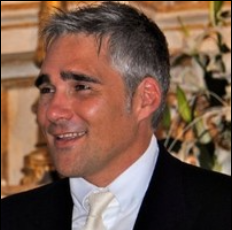
In this episode, we talk to Professor Marco Frisenda who returns from Season 1 to talk in more detail about the good, the bad and the ugly of PMO's (Project Management Office's). Marco studied Engineering at University in Italy, is PMP certified and...

Guest

Marco Frisenda

Marco Frisenda

Head of Planning at TfL

Connect

Related Episodes

More conversations on similar topics

S7E174

S7E174: Breaking down the barriers to implementation of good practice with Adrian Dooley

In this episode, Adrian Dooley discusses the barriers to applying good project management practices and the root causes behind them. He highlights the issue of project failure and the need to identify the true causes rather than just the symptoms. Adrian also explores the challenges of applying lessons learned and the impact of forgetting and lack of support. He emphasizes the potential of AI in project management but cautions against the dissemination of unreliable information. Additionally, he addresses the cost and accessibility of training and the importance of practical application and soft skills. Finally, Adrian shares the benefits of the Praxis Framework and the power of checklists in improving project outcomes. In this conversation, Adrian Dooley discusses the importance of integrating good practices and overcoming barriers to embedding them. He emphasizes the need to focus on the basics and not overcomplicate project management. Adrian shares anecdotes and highlights the value of involving business stakeholders, understanding requirements, and applying simple approaches. He encourages project managers to communicate and convince their organizations to provide space for applying learned practices. Adrian concludes by reminding listeners that projects can succeed and make a difference when common sense and the fundamentals are applied.Takeaways Integrate good practices and make them accessible to the organization. Identify and overcome barriers to embedding good practices. Focus on the basics and avoid overcomplicating project management. Involve business stakeholders, understand requirements, and apply simple approaches. Communicate and convince organisations to provide space for applying learned practices. Projects can succeed when common sense and fundamentals are applied. Originally a project manager on construction, Adrian has held various roles in project management for 45 years. He was part of the team that created one of the first project scheduling software packages and was founder member of the first independent project management magazine -Project Manager Today. He founded The Projects Group (a training and consultancy company) and served on the Executive Council of the APM. He is a non-executive Director of APM Group and the lead author of the Praxis Framework.

Listen Now
S10E222

S10E222: Why Great Project Leaders Go to the Movies with Dawn Mahan

What if the fastest way to align a project team wasn't another 47-slide deck, but a two-minute film clip? In Episode 222, Dale and Val sit down with Dawn Mahan, project leader, educator and author, to unpack why movies are surprisingly powerful tools for project leadership, communication and team alignment. Dawn coined the term "Project Land" to explain why the world of projects behaves so differently from the day job, and it has stuck with thousands of people since. We get into: Dawn's origin story, from Y2K coder to accidental project manager after one out-of-the-blue phone call Why Apollo 13, The Martian and The Matrix explain iteration, problem-solving and belief better than most training courses The real reason projects fail, and why the root cause almost always traces back to the start "Are you good?" vs "How do you feel?" and why that one change transformed how Dawn led teams Why communication is everyone's job, not just the project manager's Assessing people on ownership rather than leadership, and why that is fairer Trust, vulnerability and healthy conflict, drawing on The Five Dysfunctions of a Team Whether you are being parachuted into a live project or just trying to explain what you actually do to your family, this one is full of practical, human ways to lead people better. Dawn's books: Meet the Players in Project Land: Decide the Right Project Roles and Get People on Board Project Land Goes to the Movies: 22 Blockbuster Strategies for Project Success Connect with Dawn: LinkedIn: linkedin.com/in/dawnmahan Instagram: instagram.com/dawnjmahan Project Guru Academy: linkedin.com/showcase/projectguruacademy PMOtraining on LinkedIn: linkedin.com/company/pmotraining PMOtraining on YouTube: youtube.com/channel/UCLYJDA7-15rotZyEDEv8gyg PMOtraining on Facebook: facebook.com/PMOtiger This podcast is free and always will be. If you got value from it, pay it forward and share it with someone in your team. Stay safe, be disruptive, and have fun doing it.

Listen Now
S10E219

S10E219: Why 88% of Schedules Fail, and What AI Still Can't Fix with Michael Pink

88% of project schedules don't follow best practice. So why are we so keen to feed that data into AI and trust the output? In this episode, Dale and Val are joined by Michael Pink, Founder of SmartPM, for a sharp conversation on the forensic side of delay and the state of AI in project controls. Mike has analysed hundreds of thousands of schedules and built a career on working out who delayed what, and why nobody could ever agree. His core message: clean data is not the same as honest data. A technically tidy schedule can tell you a story that never happened, and if you point AI at it, you don't get insight, you get a confident wrong answer at scale. What we cover: Mike's route into construction, from a study-abroad debt to KPMG's construction consulting group 25 years of change in the people and process side of scheduling The shift from reactive forensic work to proactive project controls Data honesty vs data quality, and why integrity is the combination of both (framing credited to Isaac Dyer and Carlos Sanchez) The 88% problem: missing logic, inflated float and moving dates The compression factor, and the exact point a schedule becomes infeasible Why a weekly update beats a monthly one, for almost no extra time P6 vs Microsoft Project, and grading schedule quality across 35 metrics Where LLMs genuinely help, and why quantitative AI is still the long game The future of the scheduler: less building and cleaning, more strategy A genuinely optimistic look at where the profession is heading, and why this might be the best time yet to be in project controls. This episode is proudly sponsored by nPlan.nPlan Summer AI Day 2026: Construction Superintelligence takes place in London on Thursday 25 June 2026, with a fireside featuring Peter Hancock, Project Director at National Grid, and Dima Pogorelsky, MD and Partner at BCG. February's event sold out with standing room only. Register here:https://www.nplan.io/events/nplan-summer-ai-day-2026-construction-superintelligence Connect with Michael Pink at https://www.smartpm.com or on LinkedIn. If you enjoyed this episode, help us pay it forward and share it. Stay safe, be disruptive, and have fun doing it.

Listen Now

Enjoyed this episode?

Subscribe to never miss a conversation with project experts